We are building hotwork permits into 21RISK. This post covers what we are building and why we think the usual permit falls short. It ends with how to be first to use it. If you already know you want it, join the hotwork waitlist.
Why hot work
Cutting, welding, grinding and torch-on roofing start few fires by count. They start many of the expensive ones. Swiss Re's analysis of NFPA records puts hot work behind about 16% of US fires over US$10M. FM puts the average hot work loss above US$0.3M with fire protection in service. When protection is impaired, the average is more than ten times higher.
That is why hot work is one of the first things an insurer asks about. At most sites, the answer is still a paper permit in a folder.
The permit is not the problem
Most sites already use a permit. BARPI is the French agency that analyses industrial accidents. It reviewed 274 hot work accidents at regulated sites from 2016 to 2025. Where the permit status was known, 80% of the accidents had a permit in place.
The permit was filled in. What failed was everything around it: hazards nobody spotted, and the hours after the work.
The hour nobody fills in
Most hot work fires start during the work or within the hour after it. That hour is when the fire watch slips. A lunch break, a shift change, a welder who has moved on to the next job. The paper permit is already signed.
In one insurer's files, 15% of 650 fires started after a 30-minute watch had ended. That finding is why NFPA 51B raised the watch to a full hour in 2019.
A paper permit can't tell you whether the watch ran. It can only tell you that somebody ticked the box. Martin wrote about the precautions themselves in preventing fires from hot work. This post is about making sure they happen.
What we are building
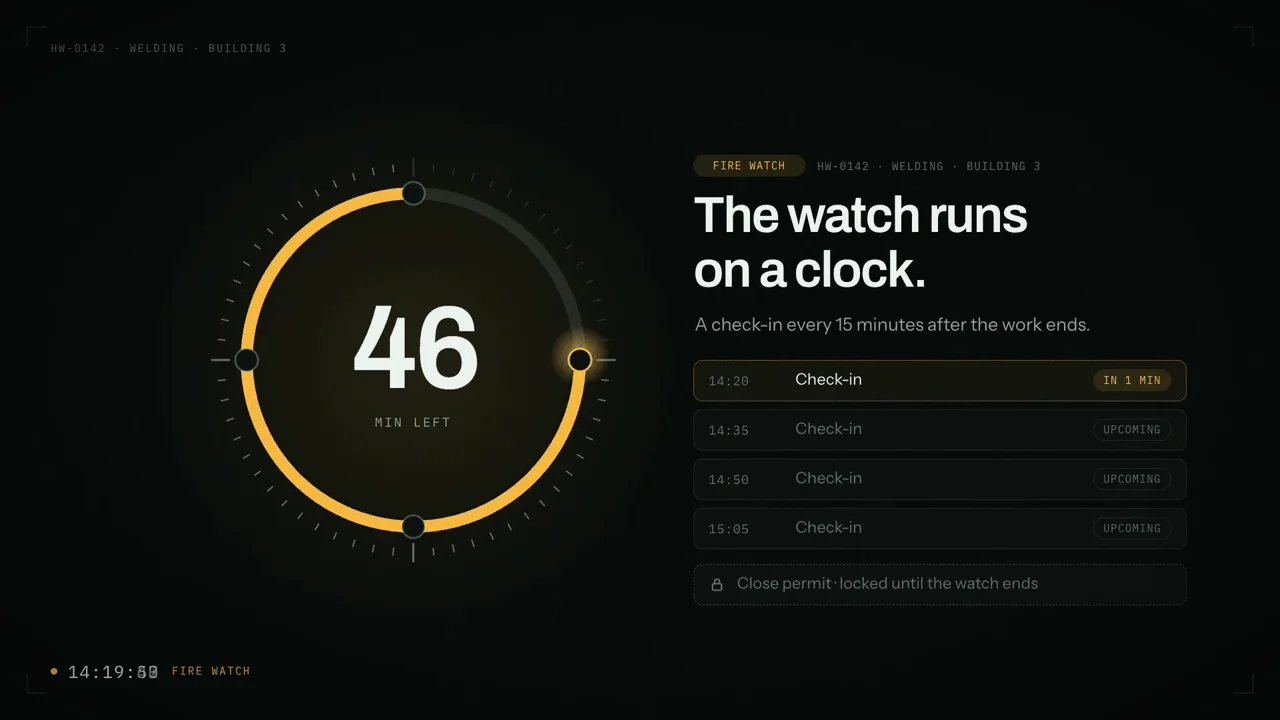
A fire watch on a clock
The watch starts when the work ends, not when someone remembers it. 21RISK asks the fire watch to check in every 15 minutes and sends a reminder before each one. A missed check-in stays on the permit's record. The permit stays locked until the watch has run.
The permit's validity and the fire watch run on separate clocks. When a permit expires, no new hot work can start under it. A watch that has already started keeps running. An expired permit never hides an unfinished fire watch.
Your procedure, per site
The numbers differ by country and insurer. In Denmark, DBI asks for at least 60 minutes and two rounds after the work. Zurich wants 120 minutes on roofs. For combustible construction with hidden cavities, FM goes up to one hour of watch plus five hours of monitoring.
So you start from a recognised standard and make it stricter per country, site and kind of work. Where rules overlap, the strictest one wins. Roofing in Sweden and welding in a Danish warehouse can follow different rules in the same tool.
We are also testing an advisor that reads your own hot work procedure. Before a permit is issued, it checks the setup against your procedure and against best practice. It explains what it would change, and why. It only advises. People still decide and sign.
Proof for the insurer
Every step is timestamped on a log that can't be edited afterwards. Who issued the permit. When the work stopped. Each check-in, and who signed the permit off. The insurer asks how hot work is managed at a site. You show them how each permit ran, check-in by check-in.
On the site, next to everything else
Hotwork is not a separate app. A permit is raised against the site it belongs to. That site already holds its COPE data, values and risk improvements in 21RISK. A paper permit knows nothing about the building it is used in. In 21RISK, the permit sits next to what you already know about that building's risk.
What we are not building
Hotwork is not a permit-to-work suite for refinery isolations. It is for the plants, warehouses and roofs where cutting and welding happen every week. It is also for the risk manager who has to answer for that work at renewal.
When, and how to be first
We are building it now, and we will share a date once we are sure of it. Everyone on the waitlist hears first.
Join the hotwork waitlist. Confirm your email, and we will tell you when hotwork permits open. If you want to shape what we build, tell us how your sites run hot work today: talk to us.